Concrete spalling is when pieces of concrete crack, flake or break away from a slab, balcony edge, column or soffit. In Queensland apartment buildings the most common cause is concrete cancer: steel reinforcement rusting inside the concrete, expanding and pushing the surface off. Spalling is a safety risk and usually gets worse and more expensive the longer it is left.
What does spalling look like?
Spalling usually starts small and is easy to dismiss as a cosmetic crack. Look out for:
- Cracks running in straight lines along balcony edges, slab edges, beams or columns, often following the line of the steel inside
- Rust-coloured staining bleeding through paint, render or tiles
- Bulging, flaking or drummy (hollow-sounding) concrete
- Exposed, rusted reinforcing bar
- Fragments of concrete on balconies, in car parks or under soffits
If concrete is already falling, treat it as a safety issue first: keep people out of the area below and get it made safe before worrying about the full repair.
What causes concrete to spall?
Concrete normally protects the steel inside it. Over time that protection can break down, and once the steel starts to rust it takes up more room than the original steel. That expansion cracks the concrete from the inside and pushes the surface off. Common reasons the protection breaks down include:
- Chlorides from salt air, which is why coastal buildings on the Gold Coast, Sunshine Coast and in Far North Queensland are especially exposed
- Carbonation, a slow chemical change as the concrete reacts with carbon dioxide in the air
- Water getting in through failed membranes, cracked tiles, blocked drains or poorly sealed balustrade posts
- Not enough concrete cover over the steel when the building was constructed
Spalling can have other causes, such as fire damage or impact, but in residential strata buildings corroding reinforcement is by far the most common one we see.
Is spalling dangerous?
It can be. Falling concrete can injure people and damage cars, and corroding reinforcement gradually weakens the structure. Balconies and slab edges are a particular concern because they are used every day and often sit above walkways, pools or car parks. Body corporates are responsible for keeping common property in good and structurally sound condition, so spalling on common property is something the committee needs to act on.
How is spalling repaired?
A lasting repair deals with the cause, not just the broken surface. The usual process is:
- Investigate. A remedial engineer inspects the building and, where needed, tests the concrete (for example cover, carbonation and chloride levels) to work out how far the problem extends.
- Specify. The engineer writes a repair specification and scope, so every builder is pricing the same work.
- Break out. Damaged concrete is removed back to sound material and behind the rusted steel.
- Treat the steel. Reinforcement is cleaned and primed, and replaced or supplemented where it has lost too much section.
- Reinstate. The concrete profile is rebuilt with a repair mortar suited to the location.
- Protect. Coatings, membranes or sealants are applied so water and salts can’t restart the process. On some buildings the engineer may also recommend corrosion protection systems.
Each stage is normally inspected and signed off by the engineer before the next one starts.
How long does spalling repair take?
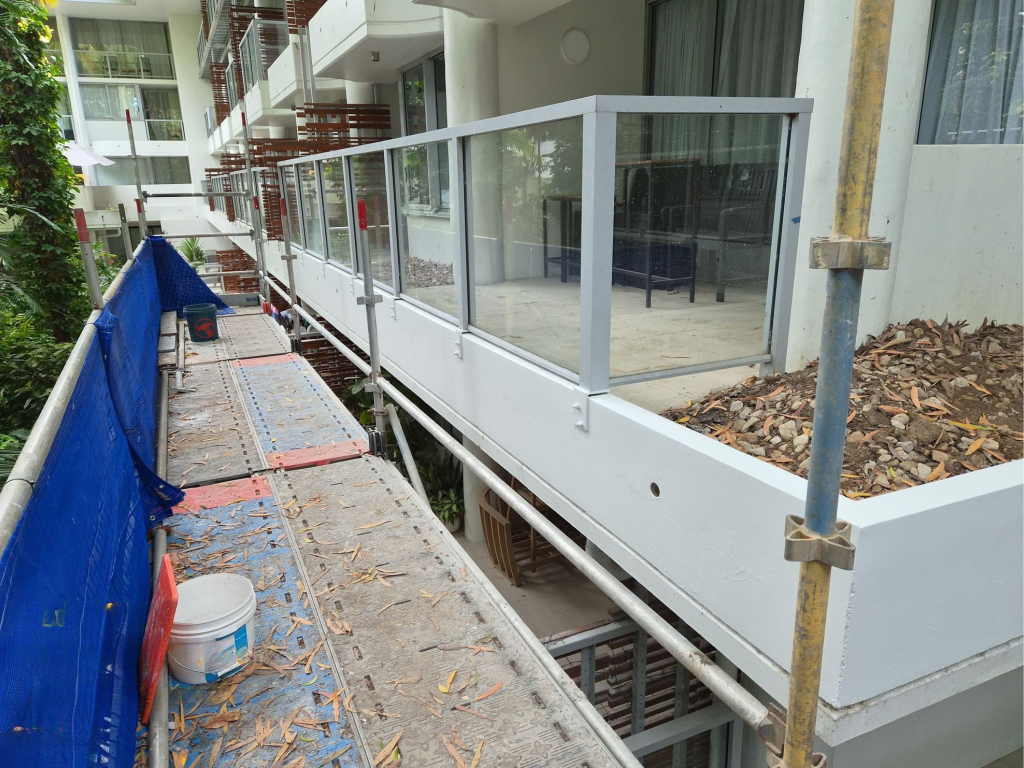
A handful of isolated repairs can take days to a few weeks. Whole-building programmes take longer. For example, our concrete cancer remediation of pool-side and street-side balconies at an operating apartment complex in Palm Cove took 20 weeks on site, with structural engineer sign-off at each stage.
Can residents stay at home during the works?
In most cases, yes. Remedial works on apartment buildings are usually staged balcony by balcony or drop by drop, with notice before work affects an apartment and access kept open wherever possible.
Frequently asked questions
Can I just patch the cracks?
Patching over spalled concrete without treating the steel underneath usually fails, often within a few years, and can hide the problem while it spreads. The repair needs to reach behind the corroded steel.
Is spalling the same as concrete cancer?
Not exactly. Spalling is the visible damage. Concrete cancer is the most common cause of it: corrosion of the reinforcement inside the concrete.
How much does spalling repair cost?
It depends on how far the damage has spread, which often isn’t visible until the concrete is opened up. An investigation stage gives you a defined scope and price, plus agreed rates for any extra repairs found once work starts.
Who should we call first, an engineer or a builder?
For anything beyond a minor isolated repair, start with a remedial engineer to assess and specify the work, then have licensed remedial builders price to that specification. If you’re not sure where to start, we can help you work out the next step.
Talk to Plexxcon Remedial
Plexxcon Remedial repairs concrete cancer and spalling for body corporates, strata managers and facility managers across South East Queensland and Far North Queensland, working to your engineer’s specification while residents stay at home. Plexxcon holds QBCC Builder – Open licence 15105455.
Learn about Plexxcon Remedial · Body corporate & strata works · Book a remedial review